
 Curcumin Has Powerful Brain Healing Properties, And May Prevent (And One Day Cure) Alzheimer’s
Extracts of curcumin, an ingredient in turmeric, is arguably the most powerful compound on the planet at fighting and potentially reversing disease. It has so many healing properties that currently there have been 6,235 peer-reviewed articles published proving the powers of curcumin as a potential cure for cancer, for curing and preventing heart disease, for reversing arthritis, for curing gut diseases from IBS to heartburn, and as the potential cure for Alzheimer’s, one that gets rid of the amyloid plaques that build in the brain causing this degenerative brain disease.
The turmeric spice, however, only contains 0.1% Curcuminoids, the healing agents in Curcumin. What has been found to reverse disease are really extracts of curcumin from turmeric, which are available today in plant-based curcumin extract.
Curcumin’s power for improving brain health lies in its ability to increase brain levels of Brain-Derived Neurotropic Factor (BDNF), a growth hormone in the brain. Many common brain disorders have been linked to decreased levels of this hormone. This may be effective in preventing, delaying, or even reversing, many brain diseases and age-related decreases in brain function and could even help improve your memory.
Curcumin is exhibiting huge potential for reversing and preventing Alzheimer’s disease.
For one, Alzheimer’s is caused by inflammation and oxidative damage to the brain, and curcumin has powerful antioxidant and anti-inflammatory abilities. Plus, Curcumin is showing potential in removing the build up of Amyloid plaques, which are literally what makes Alzheimer’s so destructive in the brain. 1, 2, 3
Turmeric has powerful liver-healing abilities
Turmeric has myriad healing powers for the liver, from healing liver damage to healing liver disease. It helps increase bile production, helping the liver to breakdown fat and heal fatty liver disease. Curcumin also enhances phase 2 detoxification in the liver and increases the production of glutathione, a potent antioxidant that heals and cleanses the liver. Curcumin is now being heavily researched as a curative for liver injury, liver cancer, liver disease and cirrhosis. 4
Curcumin leads to various improvements that can lower your risk of heart disease
Out of all the diseases, heart disease is the biggest killer in the world. Curcumin is showing powers for fighting heart disease at every step in the progression of this disease. It helps to heal the endothelium, which is the lining of the blood vessels. It is well known that endothelial dysfunction is the major culprit behind heart disease, damaging the endothelium to the point it can no longer regulate blood pressure, blood clotting and various other factors. Several studies suggest that curcumin leads to improvements in endothelial function but curcumin also reduces inflammation and oxidation which are also important in heart disease. 5,6
Curcumin / Turmeric: A Cure for Cancer on the Horizon?
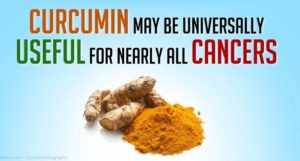
Several types of cancer have proven to be positively affected by curcumin, so researchers have been hard at work, studying curcumin as curative in cancer treatment. Curcumin has proven to inhibit #cancer cell growth, development and inhibit the spread of cancer at the molecular level and has shown that it may help reduce angiogenesis (growth of new blood vessels in tumours), metastasis (spread of cancer), as well as contributing to the death of cancerous cells. 7
Turmeric / Curcumin Relieves Pain and Inflammation Caused by Arthritis
Curcumin is proving to be a powerful agent in ridding the body of the symptoms of rheumatoid and osteoarthritis. In fact, turmeric has been used for centuries in Indian and Ayurvedic medicine to treat arthritis. What we know is that curcumin blocks inflammatory cytokines and enzymes, including cyclooxygenase-2 (COX-2), which is what medications like Celebrex are designed to do. But curcumin does this naturally, without one having to take dangerous synthetic medications with all their side-effects. 8
Curcumin has powerful anti-inflammatory properties for gut health
Curcumin has powerful anti-inflammatory properties which are demonstrating powerful gut healing potential. Curcumin has proven to benefit all aspects of inflammatory gut and bowel diseases including Crohn’s, IBS, colitis, diverticulitis, GERD and heartburn. 9
Conclusion
Because of the massive scale of studies proving the medical benefits of curcumin, curcumin is one of the most widely researched herbs in the world. Scientists are hard at work right now, charting one discovery after another in reversing deathly diseases through use of this powerful extract.
For supplementation purposes, three problems need to be overcome, 1) Turmeric contains a low percentage of Curcumin. 2) Curcumin alone in normal extract format has low absorption / bioavailability for the human body. 3) Curcumin mostly passes through the digestive tract. However, a small number of companies have now overcome these issues by using Liquid State micronized Curcumin and LiCap Technology enhancing Curcumin absorption by over 2500%
Sources
(1) Calabrese V et al. (2006). Redox regulation of cellular stress response in neurodegenerative disorders. Italian Journal of Biochemistry. 55.3-4(2006): 263-82).
https://www.ncbi.nlm.nih.gov/pubmed/17274531
(2) Baum L et. al. (2008). Six-month randomized, placebo-controlled, double-blind, pilot clinical trial of curcumin in patients with Alzheimer disease (letter). Journal of Clinical Psychopharmacology. 28:110-3.
https://www.ncbi.nlm.nih.gov/pubmed/18204357
(3) Cole, G. M. (2005). Prevention of Alzheimer’s disease: Omega 3 fatty acid and phenolic anti-oxidant interventions. Neurobiology of Aging.
https://www.ncbi.nlm.nih.gov/pubmed/16266772
(4) Rivera-Espinoza Y. et. al. (2009). Pharmacological actions of curcumin in liver diseases or damage. Liver International. 29:1457–1466.
https://www.ncbi.nlm.nih.gov/pubmed/19811613
(5) Ramirez B. A. et al. (1997). Effects of the antioxidant turmeric on lipoprotein peroxides: Implications for the prevention of atherscolerosis. Age. 20.3: 165-8.
https://www.ncbi.nlm.nih.gov/pmc/articles/PMC3455890/pdf/11357_1997_Article_15.pdf
(6) Xiao, J. (2016). Curcumin protects against myocardial infarction-induced cardiac fibrosis via SIRT1 activation in vivo and in vitro. Drug Design, Development and Therapy. 29(10):1267-77. https://www.ncbi.nlm.nih.gov/pmc/articles/PMC4820283/
(7) Deeb, D. et. al. (2003Curcumin (diferuloyl-methane) enhances tumor necrosis factor-related apoptosis-inducing ligand-induced apoptosis in LNCaP prostate cancer cells. Molecular Cancer Therapeutics. 2:95-103.
(8) Yves, H. (2013). Curcumin: a new paradigm and therapeutic opportunity for the treatment of osteoarthritis: curcumin for osteoarthritis management. Springerplus. 2: 56. https://www.ncbi.nlm.nih.gov/pmc/articles/PMC3591524/
(9) Holt P. R. et al. (2005). Curcumin therapy in inflammatory bowel disease: a pilot study. Digestive Diseases and Science. 50.11: 2191-3.